


Newbury Wharf
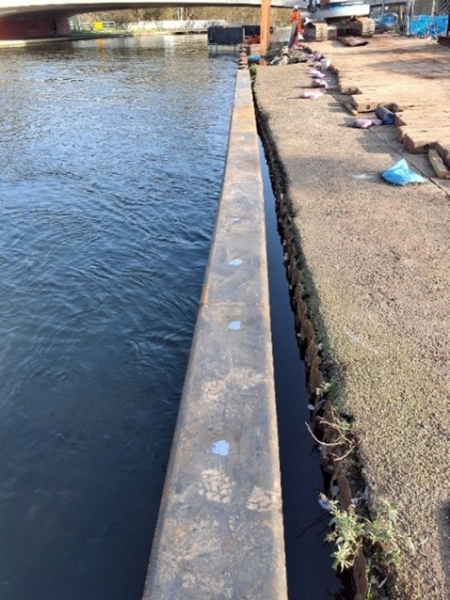
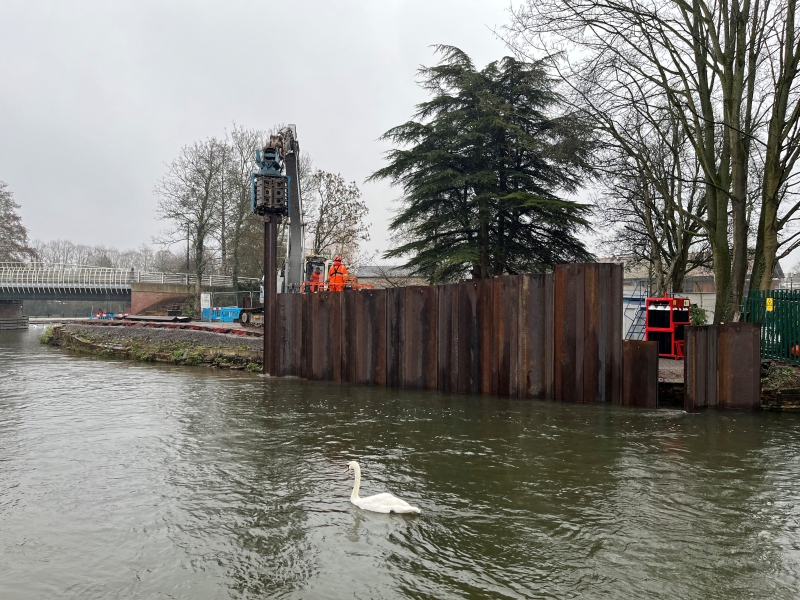
Throughout February and March 2026, VolkerGround Engineering was on site in Newbury, West Berkshire, supporting VolkerHighways with a scheme to strengthen an existing flood defence along two banks of the River Kennet.
The scope of works involved installing ZZ12 770 sheet piles, in lengths of 7 m and 8 m, along two sections of the river using a 23 tonne excavator fitted with an SG 50 Movax attachment. Once the sheet piles were in place, the works were to be completed with the installation of a capping beam, running the full length of the two pile lines. During planning, it was identified that the required welding for the capping beam could not be carried out from the landward side of the pile line. This meant an alternative method was needed, and the team opted to use a pontoon to undertake the welding works safely and effectively.
Our team was involved early in the project and worked closely with both the client and the framework contractor to ensure all aspects of the works were fully considered during the planning stage. The primary focus at this stage was identifying project risks and determining how best to manage them. Key risks included working in close proximity to third party assets and managing public interfaces, as the site was located adjacent to both a live carriageway and a navigable canal. This required the site to be fully secured from public access. Working collaboratively with VolkerHighways, our team developed methods to ensure the safety of both the public and our operatives throughout the works.
Given the proximity to the watercourse, additional measures were put in place to protect operatives. Anyone working within 3 m of the bank was required to wear an issued life jacket. A safety boat was kept on standby, and a bargemaster supervised the welding works on the pontoon, ensuring safe operations at all times. Support from VolkerMarine Services was instrumental, providing both the bargemaster and the pontoon required to complete the capping beam welding.
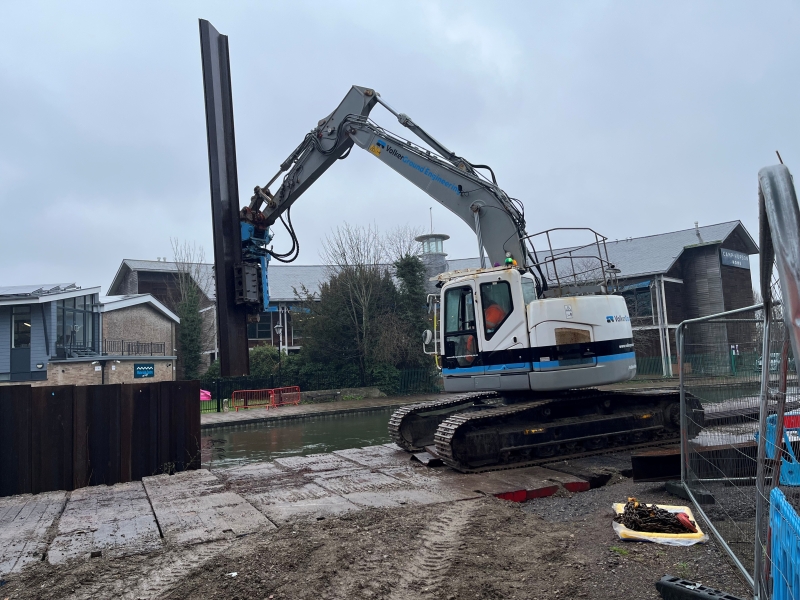
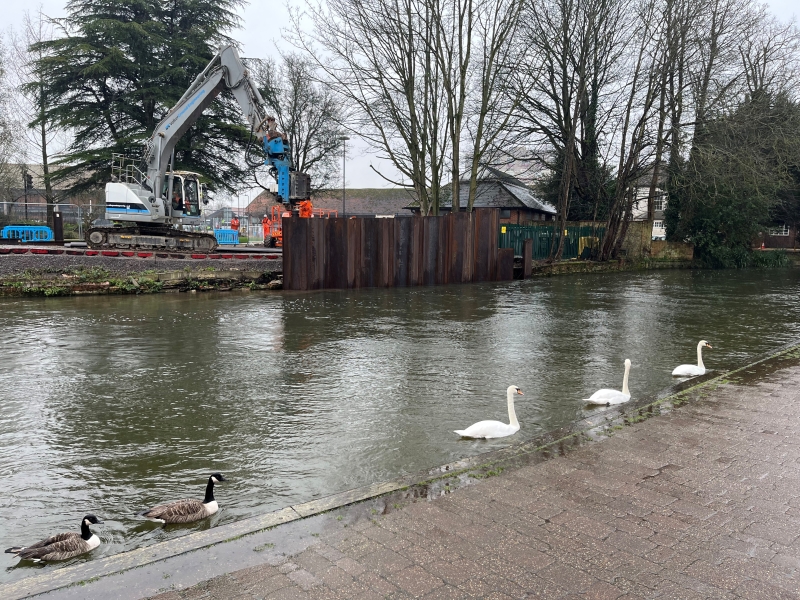
Restricted working space and limited movement on site influenced the choice of plant. To address this, the team selected a 23 tonne zero swing excavator, which allowed the working platform to be reduced in width and helped preserve the condition of the Peace Gardens.
Temporary mats were laid along the full length of the working area to protect the ground and provide a suitable route for the excavator to track along. The temporary piling platform was designed in house. Once the first section of works was completed, an inter site move was planned and executed to establish the second working area, where temporary mats were again installed.
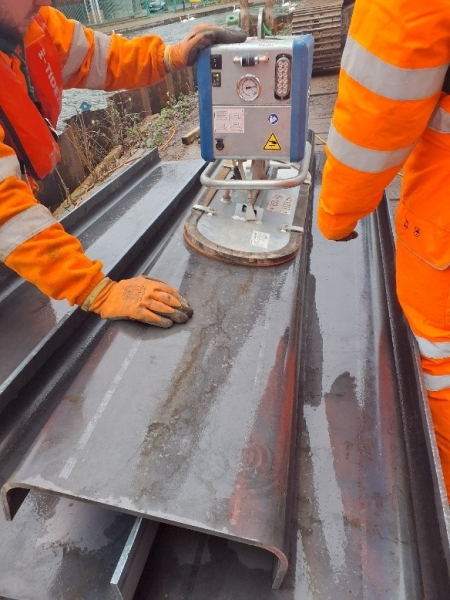
To install the capping beam onto the completed pile line, the team used an SM1200 vacuum lift hoisted by the excavator. The vacuum lift used suction to securely raise the capping beam and position it along the pile line, with the excavator operator guided by a spotter. Once correctly aligned, the suction was released, allowing the beam to be set in place ready for welding.


