


Environment Agency - Littleborough Phase 1B Flood Risk Management Scheme
VolkerGround Engineering was engaged by VolkerStevin to deliver a significant package of specialist piling works as part of the Environment Agency’s Littleborough Flood Risk Management Scheme. Designed to improve flood resilience throughout Littleborough, the scheme will provide long-term flood protection infrastructure along the River Roch and surrounding areas.
The works comprised several key construction zones, including Gale West, Gale East and Grove Lodge, where permanent flood defence walls, cofferdams, cut-off walls and retaining structures were delivered using a range of innovative techniques tailored to the site’s technical, environmental and stakeholder requirements.
Working under an Early Contractor Involvement approach, VolkerGround Engineering collaborated closely with VolkerStevin, the Environment Agency, Network Rail and local residents to develop safe, efficient and low-impact construction solutions. During the design phase, the team challenged elements of the permanent works design, resulting in a saving of approximately 70 tonnes of steel over a 70m section of wall. The revised solution also reduced the risk of exceeding vibration thresholds in areas closest to the Network Rail boundary.
Gale West
Cofferdam
During the planning phase, VolkerGround Engineering identified gaps within the existing ground investigation data, leading to an additional 16 cone penetration tests (CPTs) being undertaken. The temporary cofferdam design was subsequently adapted to accommodate potential increases in excavation depth, which proved beneficial where localised deepening was required.
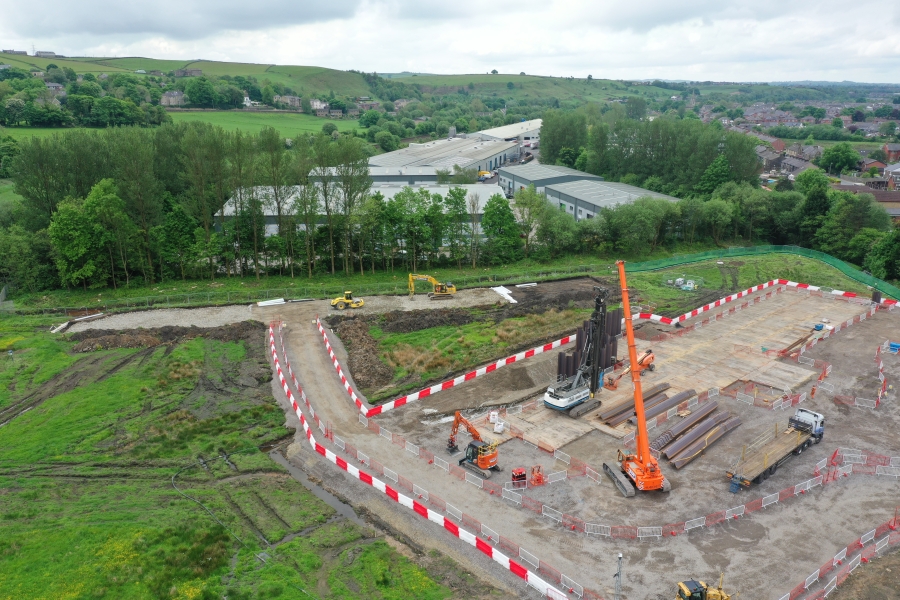
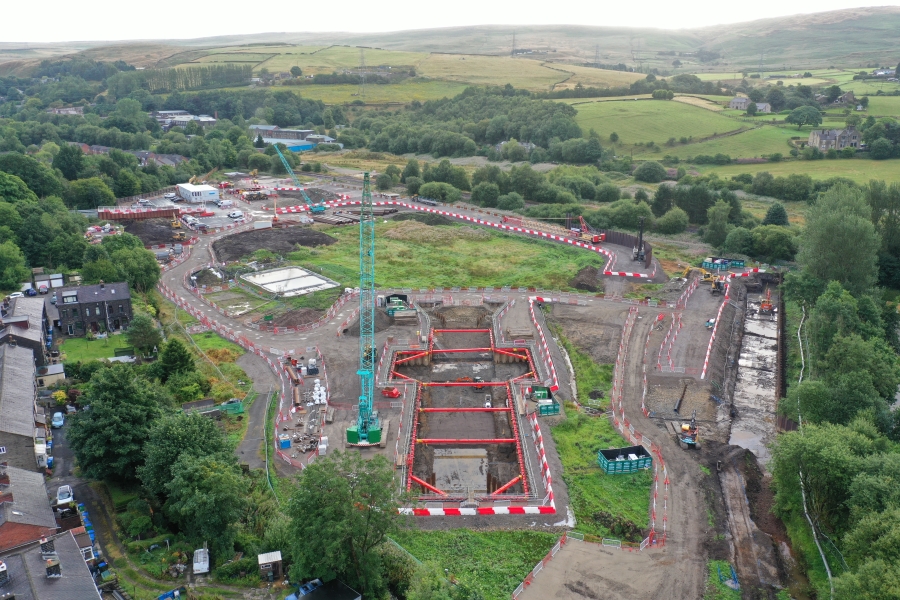
A temporary cofferdam comprising AZ24-700 sheet piles, up to 12m in length, was installed using a TM22 leader rig. The structure facilitated the safe construction of flood defence infrastructure and associated river works.
Spillway
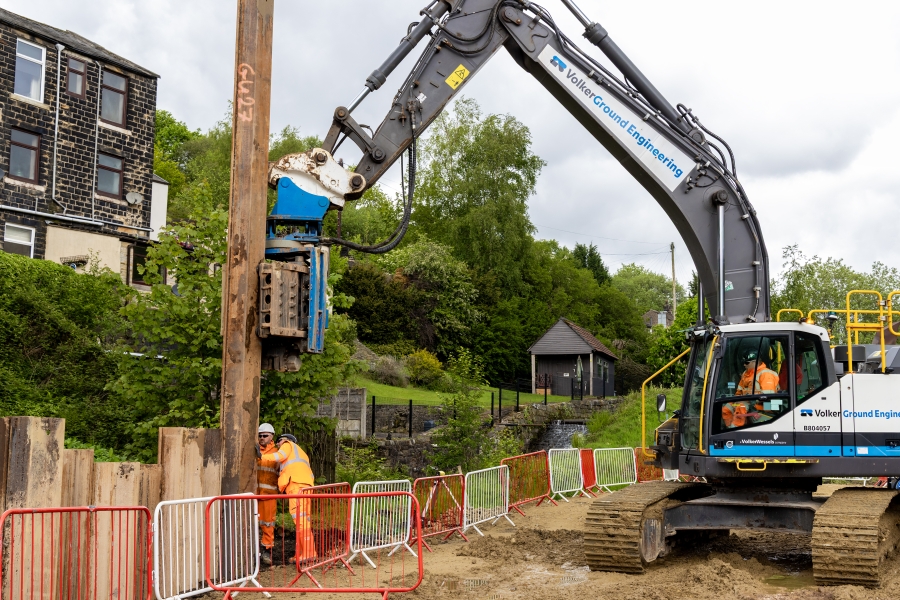
For the spillway section, sheet piles were installed using a long-reach excavator, providing significant programme benefits by reducing reliance on conventional piling rigs and accelerating delivery.
Main Flood Defence Wall
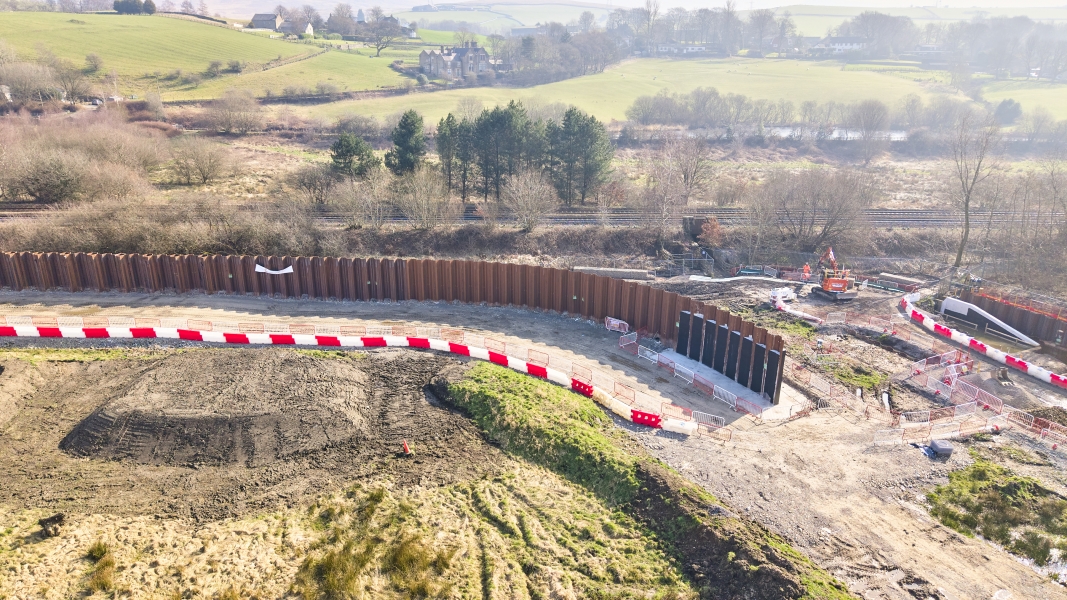
The main wall represented one of the largest piling elements of the scheme and comprised AZ52-700 sheet piles in lengths of up to 16m, together with CAZ52-700 box piles up to 16.2m long. The piles were installed using a combination of leader rig and movax attachment techniques.
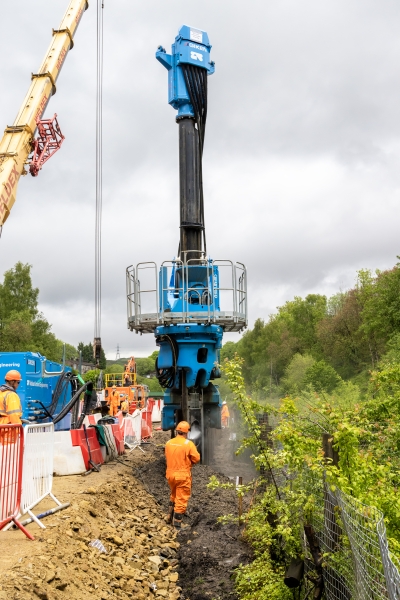
Due to the proximity of a Network Rail culvert, a specialist hydropress attachment was utilised for sections of the works. This solution significantly reduced vibration levels while maintaining productivity and satisfying stakeholder requirements.
Pre-Auger Works and Bentonite Solution
All box piles forming the reservoir wall were pre-augered to full depth using an SR75 drilling rig. Following drilling operations, the holes were backfilled with a specially designed bentonite mix to create a watertight seal and meet the performance requirements of the permanent flood defence structure.
This methodology was developed collaboratively with the design team and client following a late-stage design revision, demonstrating the flexibility and responsiveness of the project team.
Cofferdam Extraction
Following completion of the permanent works, the cofferdam sheet piles were extracted using a combination of a leader rig, crane-suspended vibratory hammer and a 250-tonne crawler crane. The extraction operation was completed safely and efficiently, allowing the project to progress to the next phase of delivery.
Shottwood Fold
At Shottwood Fold, the team installed 12.5m-long AZ26-700 sheet piles using a Giken ZU100 silent piler. The low-vibration methodology was well suited to the surrounding environment, with stakeholder management playing a particularly important role as the works were undertaken within a residential garden.
Gale West Cut-Off Wall
To supplement the flood defence system, approximately 260 linear metres of cut-off piling was installed using sheet piles ranging from 3.1m-long AZ12-770 sections to 10m-long AZ26-700 sections.
Gale East
Cofferdam
The Gale East cofferdam comprised GU21N sheet piles, 8m in length. Given the proximity to existing railway infrastructure, a Giken ZU100 silent piler was selected to eliminate vibration risks whilst maintaining safe and efficient progress adjacent to operational assets.
The team also worked closely with Network Rail to develop a vibration monitoring strategy, supported by independent noise and vibration assessments to provide assurance that surrounding infrastructure would not be adversely affected.
Cut-Off Wall
A further 110 linear metres of cut-off sheet piling was installed at Gale East using a range of pile lengths to suit local ground conditions and design requirements.
Cofferdam Extraction
Following completion of the works, the cofferdam was extracted using the ZU100 piling system. Where required, selected piles were cropped below ground level and left in situ to avoid disturbance to surrounding assets and infrastructure.
Grove Lodge
At Grove Lodge, the team delivered one of the most technically sensitive elements of the scheme adjacent to the Network Rail boundary. Works comprised circa 200 linear metres of AZ26-700 sheet piles in lengths of 11m and 12m, installed using the Giken F301 supercrush, to construct a sheet pile flood wall.
To facilitate temporary access, dummy piles were installed and later extracted using a Giken ZU100 silent piler, supported by an LTR1100 telescopic crawler crane.
The team also installed GU27N sheet piles to form a temporary retaining structure for the crane working platform.
Given the proximity of Network Rail infrastructure, the vibration-free supercrush system was selected following collaboration between VolkerGround Engineering, VolkerStevin, the Environment Agency and Network Rail, enabling the works to proceed safely whilst protecting adjacent railway assets.
The project team also worked closely with the temporary works designers to overcome challenging ground conditions associated with the site’s floodplain location, ensuring a safe and effective piling platform was developed.
Collaboration and Stakeholder Engagement
A key factor in the success of the Littleborough Flood Risk Management Scheme was the collaborative approach adopted by all parties from the earliest stages of the project.
Early Contractor Involvement enabled construction methodologies to be reviewed and refined before mobilisation, helping to address stakeholder concerns, reduce project risks and identify the most appropriate solutions for each work area.
The collaborative approach also supported sustainability objectives. In partnership with the Environment Agency and its Decarbonisation Technology Accelerator programme, VolkerGround Engineering proposed the use of EcoSheetPile™ Plus within the permanent works solution. Combined with the reuse of permanent works piles within temporary works arrangements where feasible, this helped substantially reduce the embodied carbon associated with the scheme.
Regular communication with the client and wider project team also ensured that design changes were successfully implemented while maintaining programme progress and meeting project objectives.
Through early collaboration, innovative piling techniques and close stakeholder engagement, VolkerGround Engineering successfully delivered specialist piling works across multiple areas of the Littleborough Flood Risk Management Scheme. The project supported the delivery of long-term flood protection infrastructure while overcoming complex site constraints, including sensitive residential interfaces and proximity to operational railway assets.